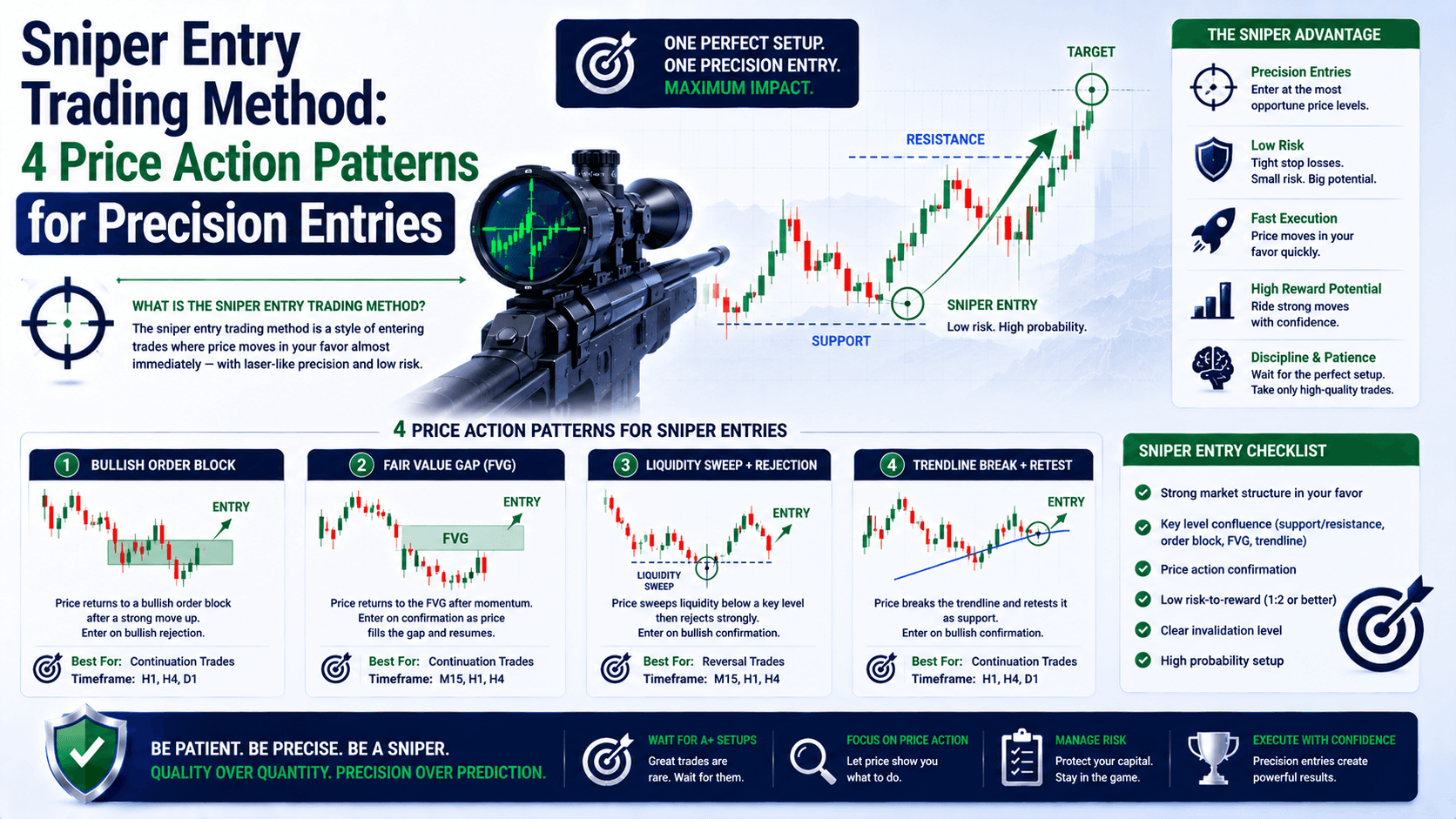

Ever Wondered Why Your Asian Session Trades Keep Getting Stopped Out?
You wake up early. Coffee in hand. You spot what looks like a perfect setup on USD/JPY during the Asian session. Price breaks above a clear resistance level. You jump in. 10 minutes later — stop loss hit. Price reverses and goes straight to your target, but you're already out. Sound familiar?
Here's the truth most trading courses won't tell you: the Asian session isn't about making money directly. It's about reading the blueprint that London and New York will follow. And if you don't understand that, you're just throwing money at liquidity traps.
Let me show you what actually happens during the Asian session — and how to build an asian session trading strategy that works.
Why the Asian Session is a Minefield for Beginners
Most retail traders see the Asian session as "boring." Low volatility. Tight ranges. Nothing happening. But Smart Money loves this session for one simple reason: it's the perfect place to set traps.
Think about it. During Asia, the big institutional players aren't fully active yet. Volume is lower. That means it takes less effort to push price through a level and trigger all those stop losses sitting just above resistance or below support.
Here's what typically happens:
- Price ranges between Asia high and Asia low for hours
- Retail traders see a breakout and jump in
- Smart Money sweeps those stops, grabbing liquidity
- The REAL move happens when London opens
And that's the core of an effective asian session trading strategy — you're not trading the breakout. You're waiting for the trap to spring, then riding the real move.

The Accumulation-Manipulation-Distribution Cycle in Asia
Let me break down exactly how Smart Money uses the Asian session. It follows a pattern called AMD (Accumulation, Manipulation, Distribution):
Phase 1: Accumulation (The Range)
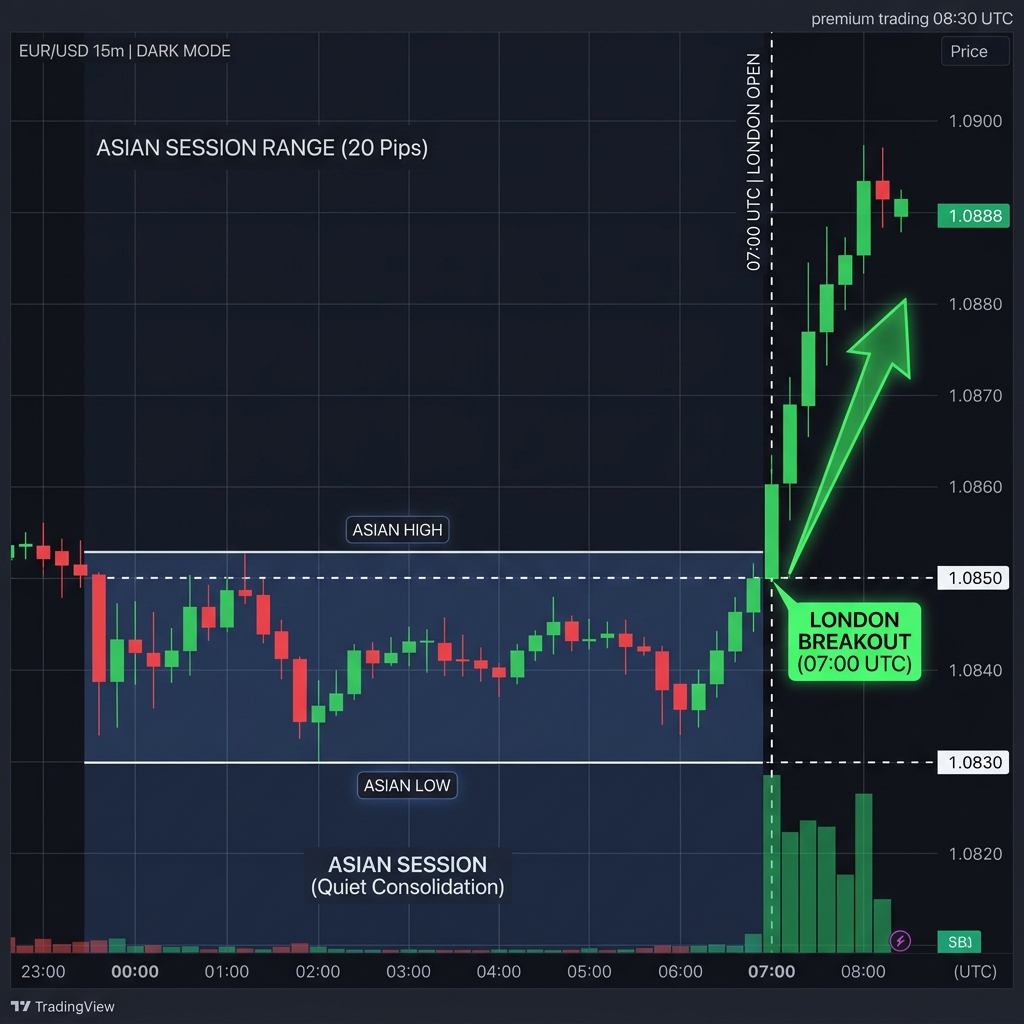
During the first few hours of the Asian session, price forms a tight range. Usually 20-40 pips on USD/JPY or AUD/USD. Institutions are quietly building positions. They're not interested in big moves yet — they want to fill orders at the best prices.
Phase 2: Manipulation (The Fake Breakout)
This is where most traders lose money. Price breaks above the Asian high or below the Asian low. It looks like a breakout. But it's a trap. Smart Money pushes price just far enough to grab all those stop losses sitting outside the range.
Let's use real numbers. Say USD/JPY is ranging between 148.50 and 148.90 during Asia. Your stop loss is at 148.95 (5 pips above resistance). Price spikes to 149.02, takes your stop, then reverses to 148.30. You lost money on a move that went exactly where you expected — just not before the trap.
Phase 3: Distribution (The Real Move)
Once liquidity is collected, price reverses and makes the real directional move. This usually happens when London opens or during the London-New York overlap.
The key insight: Your asian session trading strategy should focus on identifying Phase 1 and Phase 2, then executing in Phase 3.
Which Pairs Work Best for an Asian Session Trading Strategy?
Not all currency pairs behave the same way during Asia. Here's a quick breakdown:

| Best for Trading | Best for Mapping Only |
|---|---|
| USD/JPY — Tokyo-driven, reacts to BOJ | EUR/USD — flat until London |
| AUD/USD — moves with China data | GBP/USD — waits for London open |
| NZD/USD — volatile on RBNZ news | USD/CAD — quiet until NY |
| AUD/JPY & NZD/JPY — stronger trends | XAU/USD — builds liquidity for NY |
Pro tip: If you're building an asian session trading strategy, focus on JPY, AUD, and NZD pairs for actual trades. Use EUR/USD and GBP/USD to map the Asian range — then trade the London sweep.
The Wrong Way vs. The Right Way to Trade Asia
Let me show you the contrast:
The Wrong Way (What 90% of Beginners Do)
You see USD/JPY break above 148.90. You buy at 148.92 with a stop at 148.70 and target at 149.30. Price hits 149.02, reverses, and your stop is hit at 148.70. You lose $22 on a 0.1 lot trade. Price then drops to 148.30. You're out with a loss while the real move happens without you.
The Right Way (What Smart Money Does)
You mark the Asian high at 148.90 and Asian low at 148.50. You wait. Price breaks above 148.90 and hits 149.05. You don't enter. You wait for price to reverse back below 148.90 — that's your confirmation that the breakout was fake. Now you enter short at 148.85 with a stop above the fake high at 149.15 and target at 148.30. Price drops to 148.30. You make $55 on a 0.1 lot trade.
See the difference? The asian session trading strategy isn't about catching breakouts. It's about catching the reversal after the liquidity grab.
Essential Filters for Your Asian Session Trading Strategy
Before you take any trade during Asia, run through this checklist:
- ✅ Higher timeframe alignment — Is the daily trend bullish or bearish? Your Asian trade should align with it.
- ✅ Mark the Asian range — Draw the high and low of the Asian session. These are your key levels.
- ✅ Wait for the sweep — Don't enter until price has swept one side of the range.
- ✅ Confirm with market structure shift — A break of structure (BOS) or change of character (CHoCH) confirms the trap is done.
- ✅ Check the ADR — If Asia already covers more than 50% of the Average Daily Range, expect a reversal when London opens.
Common mistake at this step: Skipping the higher timeframe check. If the daily trend is bearish and price breaks above Asia high, that's probably a trap. Wait for the reversal short.
FAQ
What is the best time to trade the Asian session?
The best window is during the Sydney-Tokyo overlap (7:00 PM to 11:00 PM ET). This is when liquidity is highest for AUD, NZD, and JPY pairs.
Can you scalp during the Asian session?
Yes, but only on JPY, AUD, and NZD pairs. EUR/USD and GBP/USD are too quiet for scalping during Asia. Use a tight 10-15 pip range and 1:2 risk-reward ratio.
Is the Asian session good for beginners?
Yes, because volatility is lower and price action is more predictable. But avoid trading the first 30 minutes of the Sydney open — that's when gaps and spread widening happen.
How much can you make trading the Asian session?
Realistic targets are 20-40 pips per trade on pairs like USD/JPY. On a 0.1 lot, that's $20-$40. Focus on consistency, not big wins.
Quick Recap
- The Asian session is about mapping, not making money — use it to set up London trades
- Smart Money uses fake breakouts to grab liquidity from retail traders
- Focus on JPY, AUD, and NZD pairs for actual trades
- Always wait for the sweep + confirmation before entering
- Your asian session trading strategy should be: mark the range, wait for the trap, trade the reversal
Your Quick Win (Do This Today)
Open your demo account. Pull up USD/JPY on a 15-minute chart. Mark the high and low of the last Asian session (7 PM to 3 AM ET). Now watch what happens when London opens. Did price sweep one side before reversing? If yes, you just spotted the trap. Do this for 5 days straight. You'll start seeing the pattern everywhere.